
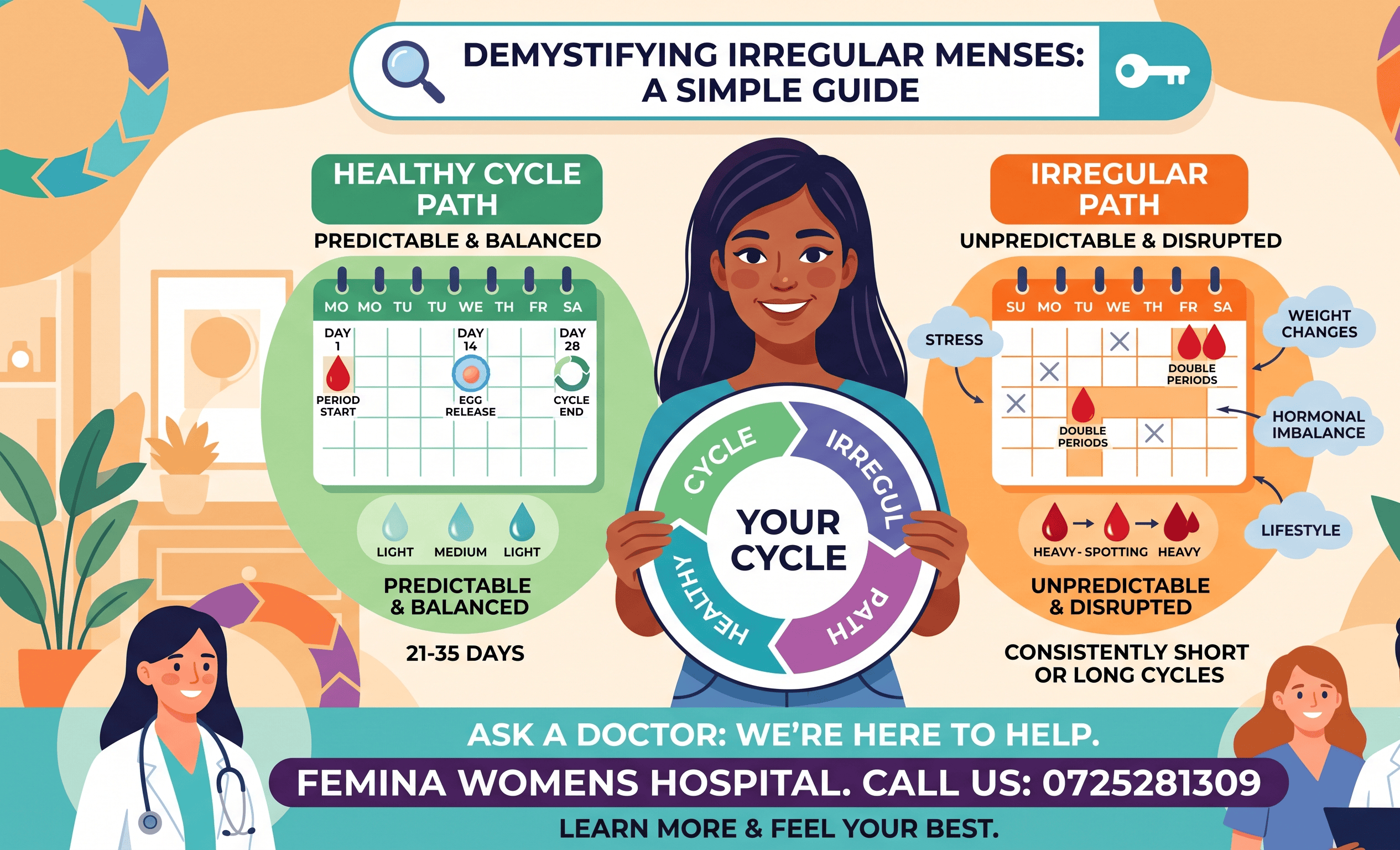

For many women, the menstrual cycle is a predictable monthly visitor, arriving with reliable signs and staying for a consistent number of days. It acts as a biological metronome, keeping time in the background of everyday life. But what happens when that rhythm breaks? What does it mean when your period starts showing up unannounced, stays far too long, or completely forgets to arrive?
Irregular menses—the medical term for irregular periods—are incredibly common. Millions of women experience them at some point in their lives. Yet, despite how common they are, unpredictable cycles frequently cause a significant amount of anxiety, frustration, and confusion.
Your menstrual cycle is much more than just the days you bleed; it is considered a vital sign of your overall well-being, much like your blood pressure or heart rate. In this comprehensive, simple guide, we will break down what makes a menstrual cycle "normal," explore the complex anatomy of your body's hormonal clock, uncover the most common causes of irregular periods, and guide you on exactly when it is time to seek professional medical advice.
To truly understand what makes a cycle irregular, we first need to define what is normal. The menstrual cycle is a complex, beautifully orchestrated sequence of events controlled by a delicate dance of hormones—chemical messengers in your body.
While the "textbook" cycle is often cited as being exactly 28 days long, every woman's body is entirely unique. A normal cycle simply means it falls within a healthy, predictable range for your specific body. The cycle is counted from the very first day of one period (day one of active bleeding) to the first day of your next period.
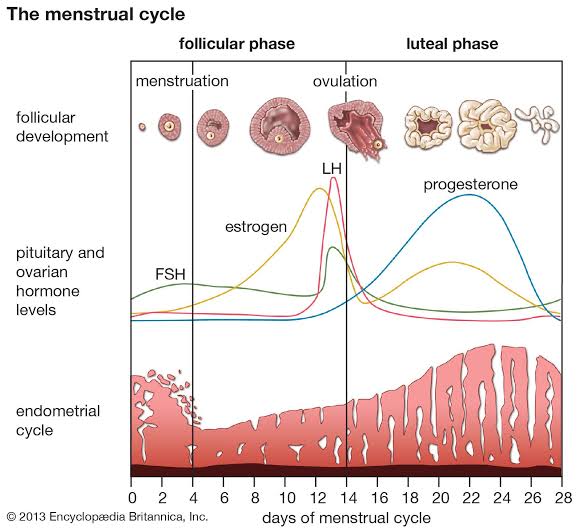
This monthly cycle is divided into four main phases:
The Anatomy of a Healthy Menstrual Cycle
- The Menstrual Phase: This is the phase you are most familiar with—your period. If a pregnancy has not occurred, the thick, nutrient-rich lining of your uterus (the endometrium) sheds and leaves the body through the vagina.
- The Follicular Phase: Overlapping with your period, this phase starts on day one and continues until ovulation. Your brain sends a signal to your ovaries to prepare a few follicles (tiny fluid-filled sacs that contain eggs). As these follicles grow, they release estrogen, which tells the lining of your uterus to start thickening again, creating a cozy "bed" just in case a fertilized egg arrives.
- The Ovulation Phase: Usually occurring around the midpoint of your cycle, a sudden surge in hormones causes the most mature follicle to burst open and release an egg. The egg travels down the fallopian tube, where it waits to be fertilized.
- The Luteal Phase: After the egg is released, the empty follicle transforms into a structure called the corpus luteum. This structure pumps out progesterone, a hormone that keeps the uterine lining thick and stable. If the egg is not fertilized, the corpus luteum shrinks, progesterone levels drop, and the lining begins to break down, leading right back to phase one.
What Constitutes "Irregular Periods"?
Think of your reproductive system as an intricate, finely tuned clock. It relies on a perfect balance of brain signals, ovarian responses, and shifting hormones to keep accurate time. When something disrupts those hormones, the clock gets thrown off.
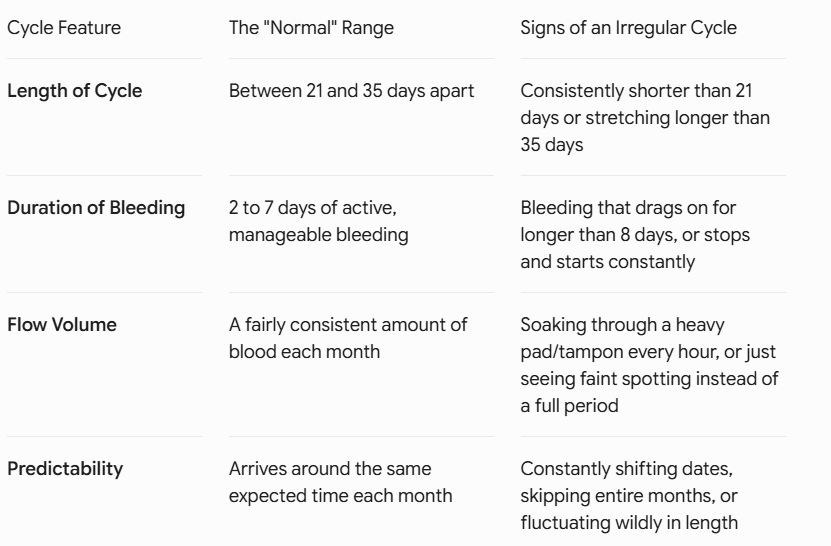
But how do you know if your period is just slightly fluctuating or genuinely irregular? Here is a simple breakdown of what to look for.
Table: Normal Menstrual Cycle vs. Irregular Menstrual Cycle
The Primary Causes of Irregular Menses
When your cycle breaks its regular pattern, it is simply your body's way of communicating that something in your internal environment has shifted. Here are the most common culprits, broken down into layman's terms:
1. Stress and Lifestyle Changes
Your brain is the master controller of the hormones that trigger your period. Specifically, a region called the hypothalamus acts as the control center. When you are under intense physical or emotional stress, your body produces high levels of cortisol (the stress hormone). High cortisol essentially signals to your brain that you are in a "survival situation," prompting the brain to temporarily shut down non-essential functions, including reproduction.
Extreme Exercise: Intense athletic training without adequate caloric intake can cause your periods to stop entirely.
Weight Fluctuations: Fat cells actually produce estrogen. If you lose a significant amount of weight very quickly, your estrogen levels drop, halting your cycle. Conversely, if you gain a lot of weight rapidly, excess fat cells can produce too much estrogen, throwing the delicate hormonal balance into chaos and causing heavy, irregular bleeding.
2. Hormonal and Endocrine Imbalances
Sometimes, the glands that produce and regulate your hormones simply get out of rhythm.
Polyendocrine Metabolic Syndrome: Formerly referred to as Polycystic Ovarian Syndrome (PCOS), this incredibly common condition causes the ovaries to produce elevated levels of androgens (male hormones). This prevents the ovaries from regularly maturing and releasing an egg, leading to skipped periods, weight struggles, and excess hair growth.
Thyroid Dysfunction: Your thyroid gland, located in your neck, acts as your body's metabolic engine. If it is overactive (hyperthyroidism) or underactive (hypothyroidism), it can easily throw off your menstrual cycle, causing periods to become unusually light, excessively heavy, or entirely absent.
3. Natural Biological Life Stages
Periods naturally fluctuate during specific, transformative phases of a woman's life as her body undergoes major transitions.
Puberty: When a young girl first gets her period, the communication pathway between the brain and the ovaries is still developing. It can take a few years for a teenager's hormones to balance out and establish a regular monthly rhythm.
Pregnancy and Breastfeeding: A missed period is often the first sign of pregnancy. Following birth, breastfeeding can also delay the return of regular menstruation due to the hormone prolactin, which suppresses ovulation.
Perimenopause: In the years leading up to menopause (usually starting in a woman's late 40s), cycles often become erratic. The ovaries slowly wind down their function, leading to skipped periods, heavier flows, or shorter cycles before menstruation eventually stops completely.
4. Underlying Medical Conditions
Certain structural or medical issues within the reproductive system itself can cause irregular, painful, or abnormally heavy bleeding.
Uterine Fibroids: These are non-cancerous, muscular growths that develop in or on the walls of the uterus. Depending on their size and location, they can cause heavy, prolonged, or very painful periods.
Endometriosis: This is a condition where tissue similar to the lining of the uterus grows on the outside of it—often on the ovaries, fallopian tubes, or the pelvic lining. This misplaced tissue still thickens and bleeds with every menstrual cycle, but because the blood has nowhere to exit the body, it becomes trapped, causing severe pain, inflammation, and irregular bleeding.
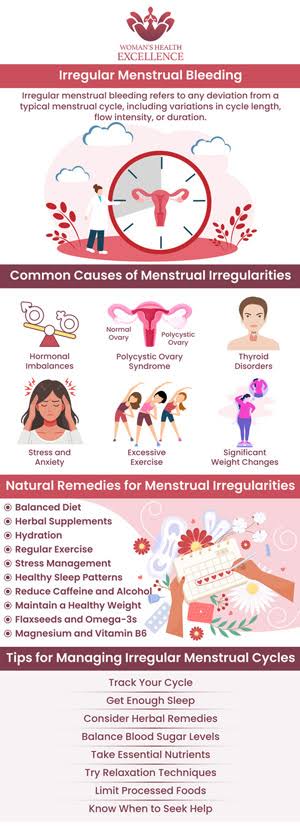
Common Triggers for Menstrual Irregularities. Source: The OB-Gyn and Incontinence Center
How Lifestyle and Diet Impact Your Menstrual Cycle
Because your reproductive system is so deeply interconnected with your metabolic system, your daily habits play a massive role in regulating your periods.
Nutrition is a foundational element of menstrual health. Consuming a balanced diet rich in healthy fats, lean proteins, and complex carbohydrates helps keep your blood sugar stable. When your blood sugar spikes and crashes due to a diet high in processed sugars, your body must produce excess insulin. High insulin levels can trigger the ovaries to produce more male hormones, which disrupts ovulation and leads to irregular periods.
Furthermore, sleep is when your body regulates and repairs its hormonal pathways. Chronic sleep deprivation increases stress hormones and inflammatory markers, both of which can delay or stop your period. Prioritizing 7 to 9 hours of quality sleep per night is one of the most effective, natural ways to encourage a regular menstrual cycle.
Tracking Your Cycle: Becoming Your Own Detective
One of the best things you can do for your reproductive health is to start tracking your menstrual cycle. You do not need to rely on memory; there are dozens of free smartphone apps, or you can simply use a traditional calendar.
When you track your cycle, you gather vital data that will help your doctor pinpoint the cause of any irregularities. You should aim to record:
The first day of active bleeding (Day 1).
The total number of days you bleed.
The heaviness of your flow (e.g., how many pads or tampons you go through in a day).
Any physical symptoms like pelvic pain, breast tenderness, or severe cramping.
Emotional symptoms like mood swings, anxiety, or fatigue.
Any spotting or bleeding that occurs between your normal periods.
Over a few months, a pattern (or a clear lack of one) will emerge, providing a "roadmap" of your hormonal health.
When Is It Time to See a Doctor?
Occasional irregularity—like being a few days late during a highly stressful week at work, or while traveling across time zones—is usually nothing to worry about. The human body is not a machine, and slight variations are perfectly normal.
However, you should not ignore persistent changes. You should schedule a visit with your healthcare provider if you experience any of the following red flags:
You skip three or more periods in a row without being pregnant.
Your cycle suddenly becomes consistently shorter than 21 days or longer than 35 days.
Your bleeding is extraordinarily heavy (requiring you to change a pad or tampon every single hour for multiple consecutive hours, or passing blood clots larger than a quarter).
Your periods become suddenly and extremely painful, preventing you from going to work or school.
You notice bleeding or spotting between your regular periods.
You experience bleeding after sexual intercourse.
You develop a fever or experience unusual, foul-smelling vaginal discharge alongside your period.

Expert Consultation for Menstrual Irregularities. Source: Advanced Fertility Center | Cancun
What to Expect at the Doctor's Office
If you seek medical care for irregular periods, your doctor will become a medical detective to find the root cause.
First, they will take a detailed medical history, which is where your cycle tracking data becomes incredibly useful. They will ask about your lifestyle, stress levels, weight changes, and family medical history.
Next, they may perform a physical pelvic exam to check for any structural abnormalities. To get a clearer picture of your internal health, they will likely order blood tests to check your thyroid function, blood sugar levels, and reproductive hormones (like estrogen, testosterone, and prolactin). Finally, a painless pelvic ultrasound may be conducted to visually examine your uterus and ovaries for cysts, fibroids, or a thickened uterine lining.
Treatment for irregular periods depends entirely on the underlying cause. If stress or weight fluctuations are the culprit, your doctor will guide you through lifestyle modifications, nutritional counseling, and stress management techniques. If a hormonal imbalance like Polyendocrine Metabolic Syndrome is diagnosed, treatments may include insulin-sensitizing medications, specific dietary supplements like Myo-inositol, or hormone-regulating therapies. For structural issues like fibroids or polyps, minor surgical interventions might be discussed.
The most important thing to remember is that irregular menses are highly treatable. You do not have to live with the anxiety of an unpredictable cycle or the physical discomfort of heavy, painful bleeding.
Your menstrual health is a vital window into your overall physical and metabolic well-being, and you absolutely do not have to navigate these confusing changes alone. Our specialists at Femina Womens Hospital are dedicated to providing expert, compassionate care to help you understand your unique body, identify the root cause of your irregular periods, and find the right medical or lifestyle solutions tailored just for you.
Contact us directly at: 0725281309 to schedule your comprehensive consultation today.
Let us help you restore your rhythm and reclaim your health!