

Have you ever felt a heavy, dragging sensation in your lower belly? Or perhaps you've noticed that your periods have become so incredibly heavy that they disrupt your daily life, forcing you to constantly change pads or cancel plans? If this sounds familiar, you are not alone. Millions of women across the globe experience these exact frustrations due to a very common condition known as uterine fibroids.
Despite how incredibly common they are, fibroids are rarely talked about openly. Many women suffer in silence, assuming that heavy, painful periods are just a "normal" part of womanhood. But they don't have to be.
In this easy-to-understand, comprehensive guide, we are going to pull back the curtain on uterine fibroids. We will explore exactly what they are, why they form, how they impact your body, and most importantly, the modern medical solutions available to help you reclaim your comfort and your life.
What Exactly Are Uterine Fibroids?
Let’s start with the basics. Uterine fibroids (medically referred to as leiomyomas or myomas) are solid, muscular tumors that grow in the wall of the uterus (womb).
Now, before you panic at the word "tumor," take a deep breath! Fibroids are almost always benign (non-cancerous). They do not increase your risk of developing uterine cancer, and they almost never turn into cancer.
Think of your uterus as a thick, muscular bag. Sometimes, a single muscle cell in the wall of this bag decides to multiply rapidly, creating a firm, rubbery knot of tissue. That knot is a fibroid.
Fibroids are incredibly diverse. A woman might have just one single, tiny fibroid, or she might have multiple fibroids of varying sizes. They can be as small as an apple seed (undetectable to the human eye) or, in extreme cases, they can grow as large as a melon, physically expanding the uterus so much that it reaches the rib cage and makes a woman look several months pregnant.
Location, Location, Location: The 4 Types of Fibroids
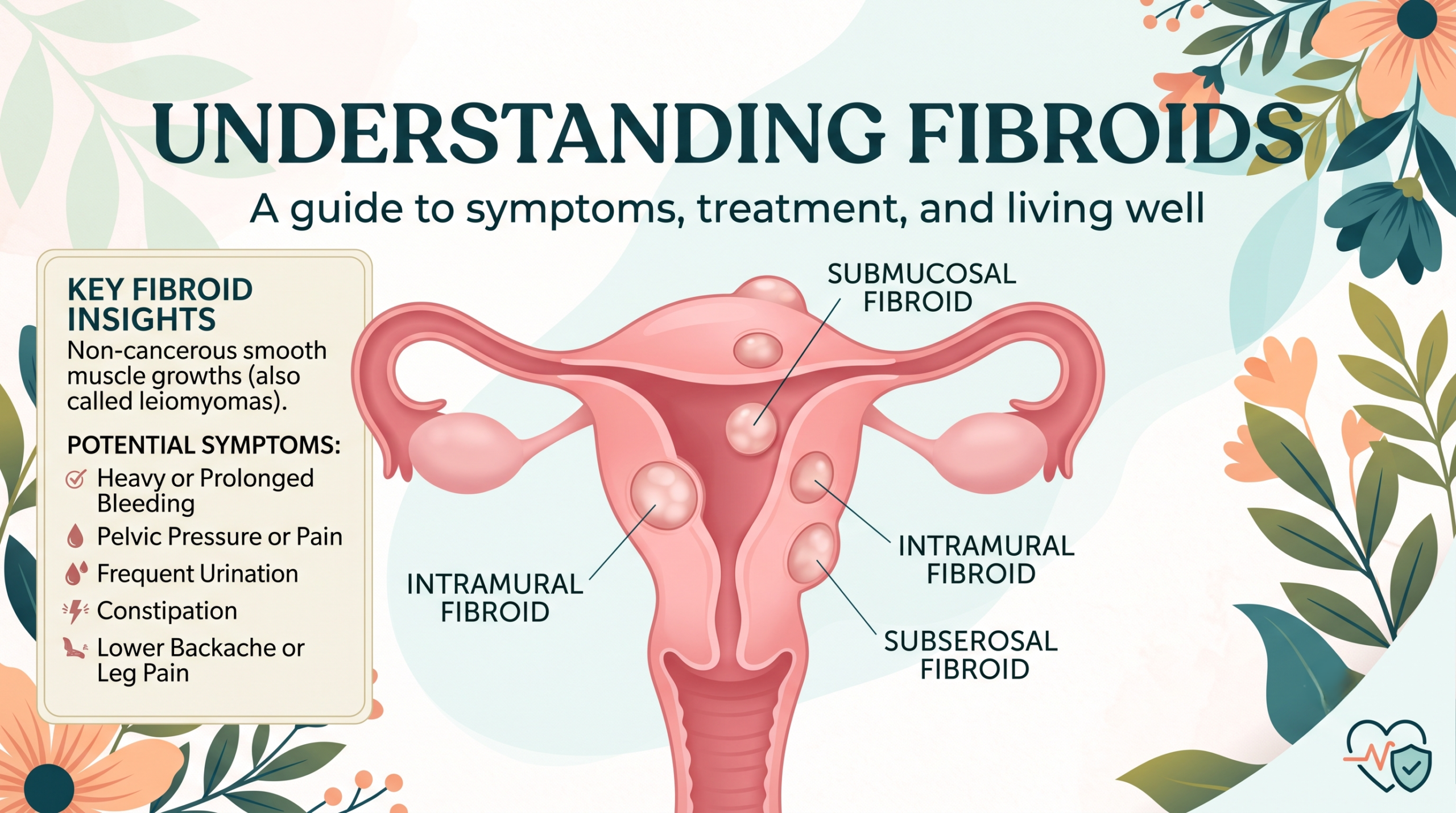
Where a fibroid grows dictates almost everything about it—from the symptoms you feel to the treatments your doctor will recommend. Fibroids are categorized by their location in and around the uterus:
Intramural Fibroids (Inside the Wall): This is the most common type. These fibroids grow within the muscular wall of the uterus. As they expand, they can stretch the womb, making it feel larger than normal and causing a heavy, aching sensation in your pelvis.
Submucosal Fibroids (Bulging Inward): These fibroids develop just under the inner lining of the uterus and bulge into the uterine cavity (the space where a baby grows). Because they disrupt the delicate lining, even very small submucosal fibroids can cause extremely heavy, prolonged menstrual bleeding and can sometimes interfere with getting pregnant.
Subserosal Fibroids (Bulging Outward): These grow on the outside of the uterus and bulge out into the pelvic cavity. While they usually don't cause heavy menstrual bleeding, they can press against surrounding organs like your bladder or bowels, causing urinary frequency or backaches.
Pedunculated Fibroids (On a Stalk): Sometimes, subserosal or submucosal fibroids develop a slender, stem-like structure that supports the tumor, making them look a bit like a mushroom. These are called pedunculated fibroids.
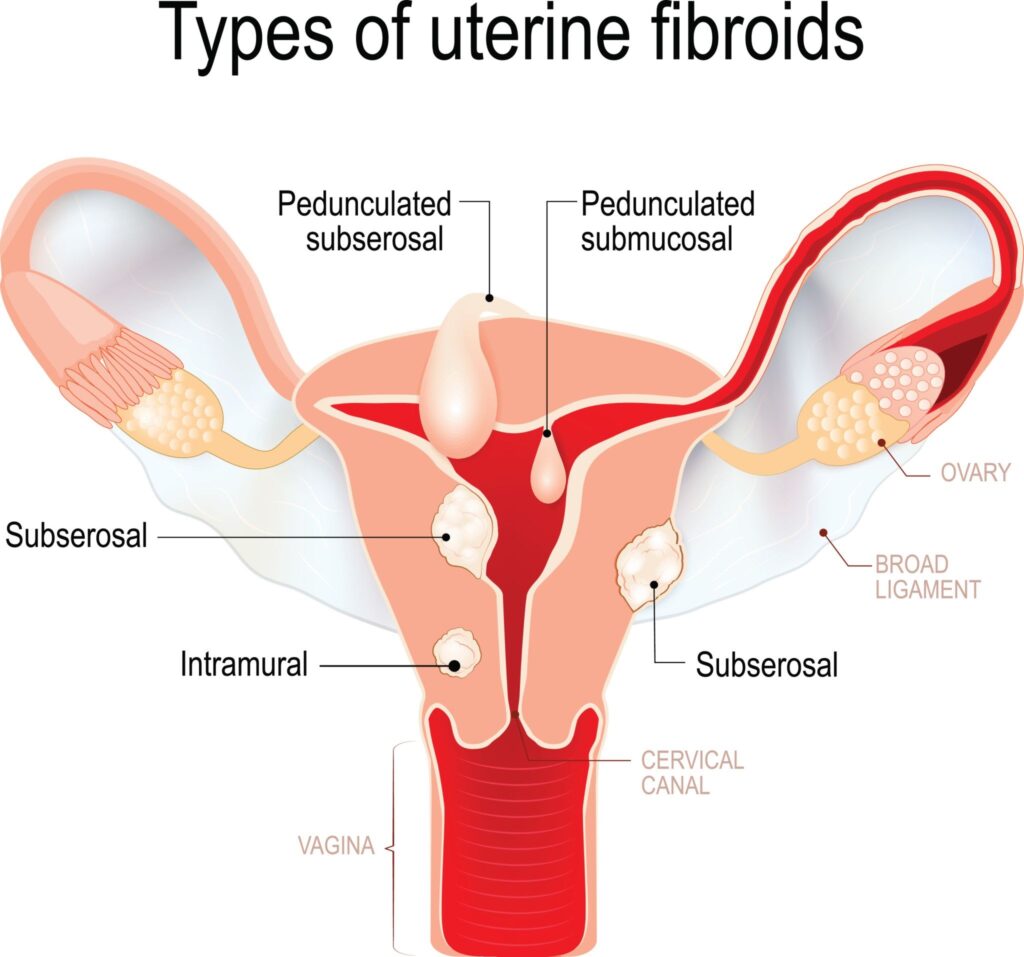
The Four Types of Uterine Fibroids. Source: ttsz / Getty Images
Spotting the Signs: Symptoms of Fibroids
Here is a surprising fact: many women have fibroids and never even know it! If the fibroids are small and located in an area where they don't press on anything, they might not cause a single symptom. They are often discovered completely by accident during a routine pelvic exam or a prenatal ultrasound.
However, for women who do experience symptoms, fibroids can be debilitating. The symptoms depend heavily on the size, location, and number of fibroids you have.
Common Symptoms Include:
Heavy Menstrual Bleeding: This is the hallmark symptom. It can mean soaking through a pad or tampon every hour, passing large blood clots, or bleeding for more than a week. Over time, this heavy blood loss can lead to anemia, leaving you feeling constantly exhausted, weak, and dizzy.
Pelvic Pain and Pressure: A constant, dull, heavy ache in the lower abdomen or pelvis.
Frequent Urination or Difficulty Emptying the Bladder: If a subserosal fibroid presses against your bladder, it reduces the bladder's capacity, making you feel like you need to pee all the time.
Constipation and Bloating: If a fibroid presses against your rectum, it can cause severe constipation and a feeling of uncomfortable fullness.
Lower Back and Leg Pain: Large fibroids can press on the nerves that run down your back and legs.
Pain During Intercourse: Fibroids located near the cervix or vaginal canal can make sex very uncomfortable.
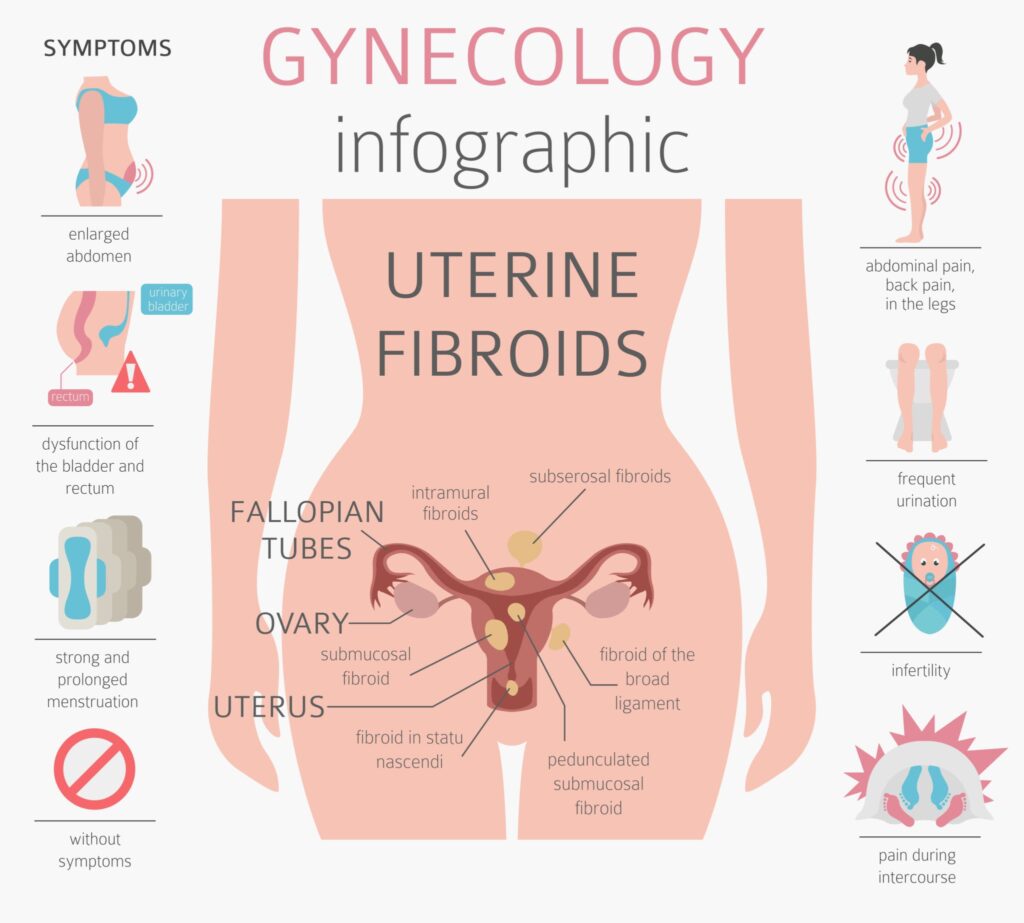
Recognizing the Symptoms of Fibroids. Source: Dmytro Bosnak / Getty Images
Why Do Fibroids Form? Understanding the Causes
Medical researchers are still trying to pin down the exact, singular cause of fibroids, but clinical evidence points to a combination of several factors:
Hormones (Estrogen and Progesterone): These two hormones stimulate the development of the uterine lining each month in preparation for a potential pregnancy. It turns out that fibroid cells contain more estrogen and progesterone receptors than normal uterine muscle cells. Fibroids tend to grow rapidly during a woman's reproductive years (when hormone levels are high) and typically shrink after menopause (when hormone levels drop).
Genetics and Family History: If your mother or sister had fibroids, you are at a significantly higher risk of developing them, suggesting a strong genetic link.
Race: While any woman can develop fibroids, research shows that women of African descent are more likely to develop them, often at a younger age, and they tend to have larger, more numerous, and more symptomatic fibroids.
Lifestyle and Diet: Diets that are very high in red meat and low in green vegetables, fruit, and dairy have been linked to a higher risk of fibroid development.
The Detective Work: Getting a Diagnosis
If you are experiencing any of the symptoms listed above, it is crucial to schedule a visit with your gynecologist. Getting a diagnosis is usually a very straightforward process:
The Pelvic Exam: During a routine exam, your doctor might physically feel an irregularity in the shape of your uterus, suggesting the presence of fibroids.
Ultrasound: This is the most common diagnostic tool. It uses sound waves to create a picture of your uterus. A wand is either moved over your abdomen or inserted into the vagina (transvaginal ultrasound) to get a clear view of the fibroids, measuring their exact size and location.
Lab Tests: If you are experiencing heavy bleeding, your doctor will likely order a complete blood count (CBC) to check for anemia.
MRI (Magnetic Resonance Imaging): For women with very large or multiple fibroids, an MRI provides an incredibly detailed, 3D map of the uterus. This is often used when planning a precise surgical treatment.
Taking Control: Treatment Options for Every Woman
There is no "one-size-fits-all" approach to treating fibroids. Your treatment plan will depend on your age, the severity of your symptoms, the size and location of the fibroids, and whether you want to have children in the future.
1. Watchful Waiting (Expectant Management)
If your fibroids are small and aren't causing you any pain or bleeding, the best treatment might be no treatment at all! Your doctor will simply monitor them during your annual exams to ensure they aren't growing rapidly.
2. Medications for Symptom Management
Medications don't eliminate fibroids, but they can shrink them temporarily and manage heavy bleeding:
Hormonal Birth Control: Pills, patches, or hormonal IUDs can make your periods much lighter and reduce cramping, though they won't shrink the fibroids.
GnRH Agonists (like Lupron): These powerful medications temporarily put your body into a state of artificial menopause. This drastically drops your estrogen and progesterone levels, stopping your periods and shrinking the fibroids. This is often used for a few months before surgery to make the fibroids easier to remove.
Tranexamic Acid: A non-hormonal medication taken only on the days of heavy bleeding to help blood clot and slow the flow.
3. Minimally Invasive Procedures
Modern medicine offers fantastic options that don't involve traditional surgery:
Uterine Artery Embolization (UAE): A tiny catheter is threaded into the arteries supplying blood to the uterus. Small particles are injected to block the blood flow specifically to the fibroids, causing them to shrink and die over time.
MRI-Guided Focused Ultrasound (FUS): This futuristic treatment is done while you are inside an MRI scanner. The doctor uses high-energy sound waves to heat and destroy the fibroid tissue without making a single incision!
4. Traditional Surgical Options
For very large, complex, or stubborn fibroids, surgery may be the best path to relief:
Myomectomy: This is the surgical removal of the fibroids while leaving the uterus intact. It is the preferred option for women who still want to carry a pregnancy. It can be done via small keyhole incisions (laparoscopically) or through a larger abdominal incision, depending on the fibroid size.
Hysterectomy: This is the complete surgical removal of the uterus. It is the only permanent, guaranteed cure for fibroids. However, it is a major surgery and means you will no longer be able to bear children.
Holistic Support: Lifestyle and Diet
While you cannot entirely prevent fibroids with diet alone, living a healthy lifestyle can help manage the hormonal balance in your body and alleviate symptoms.
Eat Your Greens: A diet rich in leafy greens (like spinach and kale), fresh fruits, and legumes provides essential vitamins and antioxidants that support metabolic and hormonal health.
Limit Processed Foods and Red Meat: High consumption of processed sugars and red meats can increase inflammation in the body and has been linked to worsened fibroid symptoms.
Manage Stress: Chronic stress elevates cortisol, which can disrupt your delicate hormonal balance. Incorporating yoga, meditation, or regular light exercise into your routine can be incredibly beneficial.
Dealing with heavy periods and pelvic pain shouldn't be your "normal." You deserve to feel comfortable, energetic, and completely in control of your health. Our compassionate specialists at Femina Womens Hospital are here to provide expert diagnosis, advanced imaging, and personalized treatment plans tailored to your unique lifestyle and goals.
Don't wait another month to seek relief.
Contact our care team directly at 0725281309 to schedule your comprehensive consultation today.
Let us help you find the right solution for you!